Colorful Watercolor Floral Leaf Patterns: A Practical Guide to Versatile Design Assets
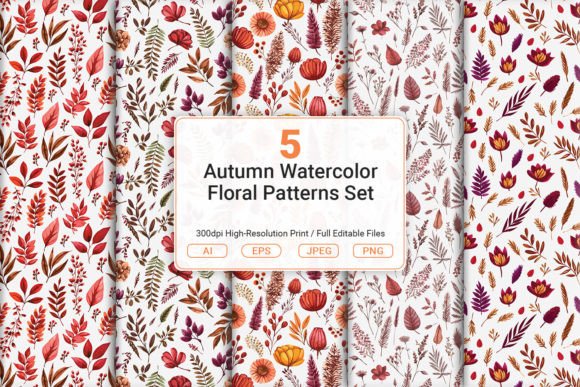
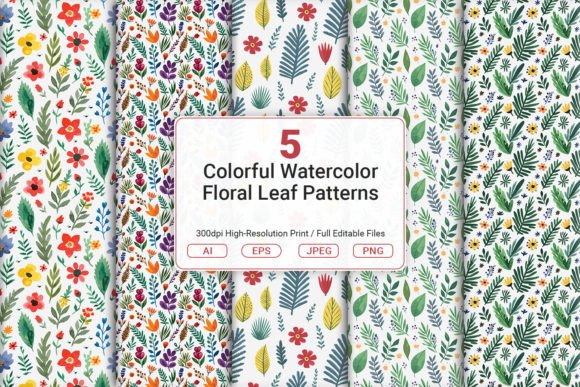
In the evolving landscape of digital and print design, finding assets that balance artistic authenticity with technical flexibility is a constant challenge. Colorful Watercolor Floral Leaf Patterns have emerged as a preferred choice for professionals and hobbyists alike who seek to inject organic warmth into their projects without sacrificing resolution or adaptability. Unlike rigid vector graphics or low-resolution raster images, these patterns offer a unique blend of hand-painted texture and scalable utility. This collection specifically features five distinct designs, each crafted to provide a vibrant touch of nature suitable for a wide array of applications, from high-end fabric printing to digital backgrounds.
Distinguishing Features of the Collection
The primary distinction of this specific set lies in its dual nature: it captures the fluid, unpredictable charm of traditional watercolor while maintaining the precision required for modern production workflows. Many floral patterns available on the market are either purely illustrative vectors, which can look too sharp and artificial, or static photographs, which lack the necessary editability. The Colorful Watercolor Floral Leaf Patterns bridge this gap by offering editable files that retain the soft edges and color bleeding characteristic of real paint.
The collection includes five unique variations, ensuring that users are not limited to a single aesthetic tone. Whether a project requires bold, saturated hues for a statement piece or softer, more muted tones for a background, the versatility of this palette allows for seamless integration into diverse brand identities. The high-resolution nature of these files, provided at 3600 x 3600 pixels (equivalent to 12 x 12 inches), ensures that they remain crisp whether printed on a small greeting card or scaled up for large-format wall art.
File Formats and Technical Flexibility
One of the most critical factors when evaluating design resources is the format in which they are delivered. A pattern that looks beautiful on a screen may be unusable in a professional printing environment if the file types do not support the necessary workflow. This collection addresses common industry needs by providing a comprehensive suite of formats:
- Ai Illustrator Files: These open-source files are crucial for designers who need to manipulate individual elements. Being able to separate layers, adjust colors, or modify the scale of specific leaves allows for deep customization that closed formats cannot offer.
- Eps File: Essential for compatibility with various desktop publishing software, including older versions of Adobe InDesign or CorelDRAW. This format ensures that the pattern remains editable across different operating systems and software suites.
- JPG and PNG (3600 x 3600 pixels): While vector-based files offer scalability, having high-resolution raster versions is vital for immediate use in web design, social media graphics, or direct-to-film printing where vector conversion might introduce artifacts. The 12 x 12 inch resolution provides ample room for cropping and repositioning without pixelation.
When comparing this package to standard clipart sets, the inclusion of both source (Ai/Eps) and output (Jpg/Png) files represents a significant advantage. It eliminates the need for additional conversion steps, saving time and reducing the risk of quality loss during the export process.
Comparing Usage Scenarios: Print vs. Digital
Understanding where Colorful Watercolor Floral Leaf Patterns fit best requires an analysis of their performance across different mediums. The decision to use these patterns often depends on the final output medium and the level of customization required.
Fabric and On-Demand Products
For those exploring the print-on-demand market, such as custom t-shirts, tote bags, or home decor, the texture of watercolor is particularly effective. Unlike geometric patterns that can sometimes appear dated, floral watercolors evoke a sense of craftsmanship and luxury. However, a key consideration here is the color mode. While the provided files are high-quality, designers must ensure they convert the RGB color space to CMYK if using professional offset printers, whereas digital printers like sublimation machines work well with the native RGB data. The 3600-pixel width is ideal for repeat patterns on fabric rolls, allowing for continuous tiling without visible seams.
Stationery and Editorial Design
In the realm of physical stationery—notebooks, binders, planners, and journal covers—these patterns serve as excellent backdrops that do not overpower text. The "versatile usage" aspect shines here; because the files are editable, a designer can reduce the opacity of the pattern to create a subtle watermark effect or increase the contrast for a bold cover. When compared to solid-color covers or generic stock photos, a custom-tiled watercolor pattern adds a layer of sophistication that appeals to the adult demographic aged 20–50, who often prefer aesthetically pleasing, functional items.
Digital Projects and Web Backgrounds
For digital applications, the PNG version of the Colorful Watercolor Floral Leaf Patterns offers transparency options that JPG files do not. This makes them perfect for website headers, email newsletter footers, or social media story templates. The tradeoff in this scenario is file size; while 3600 pixels is excellent for print, it may require compression for web use to ensure fast loading times. Nevertheless, the visual impact of a high-quality watercolor texture often outweighs the minor delay in page load speed, especially for lifestyle blogs, craft sites, or boutique e-commerce stores.
Evaluating Alternatives and Tradeoffs
No single asset type is universally superior. When considering Colorful Watercolor Floral Leaf Patterns, it is important to weigh them against other design approaches.
Vector vs. Raster Texture: Pure vector illustrations are infinitely scalable and have smaller file sizes, but they often lack the organic imperfections that make watercolor appealing. If a project demands a strictly geometric or minimalist look, a vector floral pattern might be a better fit. Conversely, if the goal is to convey emotion, nature, or a handmade feel, the watercolor approach is unmatched.
Stock Photography vs. Custom Patterns: Using a photograph of real flowers is another alternative. While authentic, photographs are difficult to tile seamlessly and often contain distracting backgrounds that require extensive masking. Pattern collections like this one are designed specifically for repetition, making them far more efficient for wrapping paper, wallpaper, or textile design where the image must repeat flawlessly.
Free vs. Premium Resources: Free resources often come with limitations regarding file formats or resolution. They may only offer low-res JPGs or locked vector files. The value proposition of this collection lies in the combination of high resolution, multiple file formats, and the ability to edit the source files. For professional use, the time saved by having editable Ai and Eps files often justifies the investment over free alternatives that might require hours of manual cleanup.
Decision Factors for Buyers
Selecting the right design resource involves aligning the tool with the specific constraints of the project. Here are scenarios where Colorful Watercolor Floral Leaf Patterns are the optimal choice versus situations where another option might be preferable.
You should choose this collection if:
- You require a natural, organic aesthetic that stands out from generic corporate designs.
- Your workflow involves both print and digital outputs, necessitating versatile file formats.
- You need to customize colors to match specific brand guidelines without losing the watercolor texture.
- The project involves scaling, such as creating wallpaper or large-scale wall art, requiring high DPI resolution.
Consider an alternative if:
- The project demands a strictly monochromatic or grayscale theme, as the vibrant palette of this collection may be difficult to desaturate without looking muddy.
- You are working within strict file size limits for mobile apps where high-resolution images would cause performance issues.
- The design style requires hard-edged, precise geometry rather than soft, blended brushstrokes.
Conclusion on Integration and Impact
The integration of Colorful Watercolor Floral Leaf Patterns into a design project goes beyond mere decoration; it sets a tone of creativity and attention to detail. By providing a robust package that includes editable AI and EPS files alongside high-resolution JPG and PNG options, this collection caters to the practical needs of modern creators. Whether used for gift wrapping, invitations, or digital wallpapers, the ability to customize and scale these patterns ensures they remain relevant across various trends.
Ultimately, the choice between this collection and other design assets comes down to the desired outcome. If the goal is to create something that feels personal, textured, and professionally finished, the versatility offered by these five patterns makes them a strong contender. They empower users to move beyond static imagery and engage with a design system that adapts to their vision, proving that a touch of nature can be both beautiful and highly functional in any context.